Psychologists and philosophers occasionally debate amongst themselves whether unhappy people enjoy their misery, which, somewhere along the line, they chose to experience. Can a choice, no matter how painful, reflect anything but preference? It was with such thoughts in mind that I opted to eschew the comfort of bed and books and, instead, spend my Shiva Asar b'Tamuz in Toledo.
I understand that travel on fast days, especially of the sightseeing sort, falls into a shul rabbi's "generally shunned" category. At the same time, by focusing on the worst aspects of travel - making sure I missed my train, spending an hour and a half in line, bruising up the tender flesh where toe and sandal strap meet - I could no doubt achieve plenty of fast day unease.
Of course, the choice of Toledo was not without its religious motivations. The city reeks of history: it was a major - if not the major - Jewish city center during the confluence of political, social, scientific, philosophic, artistic, and Torah achievements we collectively refer to as the Golden Age of Spanish Jewry.* Yehuda HaLevi was born here, Shmuel HaNagid drew his war plans here, and here the course of Halakha changed forever with the arrival from Provance of the Rosh. The city boasted a sizeable Jewish quarter (today's "Juderia") which, at its peak, supported no less than twelve congregations. Thus, I knew what I was doing - I even looked up the bracha to be said when viewing a destroyed shul. Of the entire experience, I expected something akin to visiting the house of one's youth, or the tomb of one's grandparents, and I was curious to see which of the two the city more closely resembles.
In terms of offering protection from the elements, Toledo had nothing on the house of my youth, and I slugged through a day of throat-tightening weather, of three digit heat in the five o'clock hour. Actually, we slugged through it, for I shared the experience with D., the interreligious diplomat of a well-known Jewish organization. (In his line of work, a last minute invite to Madrid, on the letterhead of the King of Saud, is only memorable if the tickets are first-class.) While one is the loneliest number, two is certainly the worst for a Tzom, and I fasted like my mother: never hungry, but desperate for drink. On my own, I could ignore the misery, losing myself in the sights and sounds of a new city; with three or more, I imagine, the inertia of numbers and the distraction they provide would propel me to nightfall. Two, however, is like fasting in front of a mirror, bearing witness to the slow but steady parching of skin, whitenening of tongue, and losing of patience. Similarly, the mores of traveling with a semi-stranger activates a certain quasi-maternal responsibility that is fueled much more by politeness than any realistic concern. The other's enjoyment is verified, his current health confirmed, and - to an extent I now recognize as almost demented - all conversations eventually lead to our prospects of passing out.
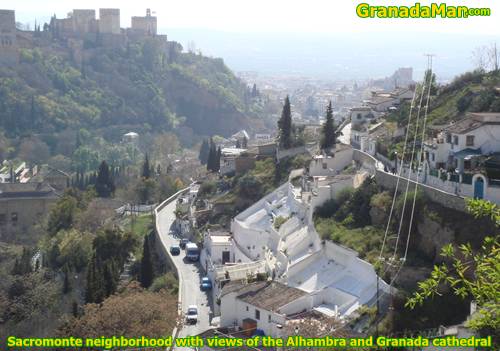
Toledo's old city wall and narrow winding streets are convincing, transporting: it really feels medieval. The clash and synthesis of Moorish stylings and Gothic architecture testifies to the struggle between exotic and European I saw from above, while serving as a credible - no, picture perfect - setting for Sefardic Jewry. From the city walls one looks out upon yellowing fields and desert-colored hills - the nickname "Jerusalem of Spain" had its topographic merits - and is reminded of a time when an urban and agricultural lifestyle were not mutually exclusive. It would be both a cliche and an exaggeration to say the history felt "real", but it certainly felt appropriate. In my mind, already in a ripe state for hallucination, I saw little Jewess' transporting trays of bread (on their head, of course) up winding alleyways. For a moment, names in the back of my Gemara became majestically robed men, pacing to Mincha in deep contemplation. Others, both wrinkled and wisened by time, explained the day's lesson in a soft but penetrating Judeo-Arabic. There, between those two hills, the community leaders took their Shabbat afternoon stroll. Here, for much longer than history generally allows, the Jewish people thrived.
The imaginary time-travel was especially strong in the Synagogue, whose looming emptiness demanded filling in. I envisioned it on a Friday night, full and humming and familiar. I saw it on Rosh Hashana, complete with an elderly Rabbi raising a Shofar to his lips and the unnatural silence of mass anticipation. I heard the silent prayer, the reiterated hopes seeking His presence, His protection, His forgiveness. These intricately carved arches, these octagonal columns, these rows of open space pointing to high vaulted ceilings - I wanted to take them for granted, get used to them, know them as anything but curious and historical artifacts.
This assignment, feeling at home in the shul, was fairly difficult, mainly due to my constantly catching the eye of about a dozen statues of Jesus Christ. The building was converted into a church after 1492 (to this day, it is the Our Lady of Santa Maria La Blanca Synagogue) and it looks like they did little more than drape the Aron Kodesh in fancy Christmas lights and expensive icons. Looking at the Chrisian altar had the simultaneous effect of a punch to the gut and a slap in the face. Despite myself, I was pissed: this is my history, my people, my fucking building, so who the hell are you erecting blood sown idols with ridiculously well-defined abs, forbidding me from taking pictures, charging me for entry (!) when - whenever the hell I want - I could call a standard "mincha, mincha" and ten dudes would appear and start shuckling and the guard would be too embarrassed to ask us to stop and some Chinese tourists would reverently watch and even secretly take some video and we'd just own the place so much that the all the Jesus idols in the world would come crashing down and bring us all back together in Jerusalem.
I was frustrated and indignant and wanted very badly to spit.
The issue at hand was not the Church's right to annex spiritual territory, which is upsetting, but not in the existential sense. (For the record, the Muslims got it worse. The St. John of the King's Church, an immense and towering structure, maintained as its entranceway what appears to have been a Moorish mosque, with some Arab calligraphy still decorating the walls. It's a grand, gold embossed example of one-upping.) It was a mix of many thoughts that put anger in my heart.
I hate that Toledo markets itself as a symbol of La Convivencia, the period of relative tolerance and diversity between Muslims, Christians, and Jews. I don't know who makes these decisions, but in my mind, all potential candidates for international symbol of peaceful coexistence must pass the following test: did one ethnic group ever tell another to leave its country or die like pigs? A plaque celebrating the Spanish Expulsion still hangs in Toledo's Catedral and I sometimes wonder if the tourists buying those stupid T-shirts - "Toledo: Three Religions of Tolerance" - would appreciate the irony in "Germany: 2000 years of Jewish History."
I hate that this a tourist trap, for it only drives home that the Golden Age no longer exists. My visit didn't bring back the nostalgia of an old house, but the mourning of an ancestor's grave, a pain only magnified when touching and exploring the still visible skeleton. This great culture, which produced such powerful minds and ideas and influence, now produces postcards. This was a highlight of two thousand years, this was a temple! Now its in ruins and we visit it like Disnleyland. Turns out that the bracha upon seeing a ruined shul is reasonably well known: Baruch Dayan Emes.
Lastly, and most forcefully, I hate that this is all we got. The Catedral is overwhelming: in design, in detail, in the artifacts it contains, and the financial power it represents; in comparison, the synagogues are pathetic. Here I am at a pinnacle of Jewish history and all I can see is an asterisk in the Toledo guide book. That's us, the asterisks of world history. Spanish Jewry, when viewed in the context of Spain as a whole, is probably something like Jerusalem's Armenian Quarter: hmmm, we can wonder out loud, that's interesting. Now let's go look at the real stuff.
One of the details of Moshiach's arrival that often goes unexplained is just how quickly and silently Jews move from blip on the map to center of the world's attention. We just take it for granted, without recognizing how great the jump is. Granted, Jews have played a disproportionately large role in world history and we have earned more than our fair share of newspaper headlines, but, you know, there are days when we don't even make the front page. Thus, even in contemporary New York City - the most succesful, secure, and culturally influential Jewish community in world history (certainly safer than the Midbar!) - where Jews are a truly dominant force, they will never be the center of a NYC tour. We are an asterisk, and when we leave, tourists will purchase merchandise bearing the likeness of a bagel. Assuming that our religion exists in order to somehow effect or influence the universe and all humanity, this is a very troubling realization.
I mourned it all: the re-sweetened history, the loss of a community, the failings of a people. It worked - I was miserable, and when inside Toledo's cathedral and churches, I always found the opportunity to spit.
--
*I'm including in that the later, Christian-led Silver Age.
Friday, July 25, 2008

Wednesday, July 23, 2008
Stranguage #2
Spanish and English share many cognates, making it not so impossible to learn the Spanish word "imposible." Occasionally I'm struck by how deep the cognate connection runs. A few examples:
1. The "second" item in a list is el segundo. One of the stranger things about "second" is why it also refers to that constantly tick-tocking unit of time, a second, which in Spanish is likewise referred to as a segundo.
2. In contrast to left, English employs the word "right." We also use it to refer to someone's legal entitlements, like his right to remain silent, and their rights to a screenplay. Derecho is the word in Spanish: meaning, yet again, a right turn, a right to bear arms, and all rights reserved. Occasionally languages include some poorly thought out phrases: when giving directions, telling someone to proceed derecho often means they should continue straight (!), a useage I considered absurd until I realized the confusion that should follow when being told to "go right ahead!"
3. If my mother ordered me to get dressed, she would be surprised if I exited my room in an actual dress. (That is, if past performance is no indicator of future activity) She would be fairly content, however, if I appeared in any other style of dress. In other words, dress refers to a specific female garment, all forms of clothing, and the state of not being nude - being dressed. I once wondered why, of all the clothes in our dresser, single piece flowy attire was selected as metonym. Once again, Spanish follows suit, with vestido referring to that which careless men occasionally call a skirt, to all clothes in general, and to the condition of wearing a garment.
Hmm!
1. The "second" item in a list is el segundo. One of the stranger things about "second" is why it also refers to that constantly tick-tocking unit of time, a second, which in Spanish is likewise referred to as a segundo.
2. In contrast to left, English employs the word "right." We also use it to refer to someone's legal entitlements, like his right to remain silent, and their rights to a screenplay. Derecho is the word in Spanish: meaning, yet again, a right turn, a right to bear arms, and all rights reserved. Occasionally languages include some poorly thought out phrases: when giving directions, telling someone to proceed derecho often means they should continue straight (!), a useage I considered absurd until I realized the confusion that should follow when being told to "go right ahead!"
3. If my mother ordered me to get dressed, she would be surprised if I exited my room in an actual dress. (That is, if past performance is no indicator of future activity) She would be fairly content, however, if I appeared in any other style of dress. In other words, dress refers to a specific female garment, all forms of clothing, and the state of not being nude - being dressed. I once wondered why, of all the clothes in our dresser, single piece flowy attire was selected as metonym. Once again, Spanish follows suit, with vestido referring to that which careless men occasionally call a skirt, to all clothes in general, and to the condition of wearing a garment.
Hmm!
Sunday, July 20, 2008
Journal from Spain #4 - Where I Now Live
The best way to describe my flat, to fully capture the charm and grace and social circumstance, is to simply state that I live with some dudes.
Six dudes (the one from LA included) share a kitchen, three bathrooms, a sofa-TV nook, and little else. I'm occasionally amazed how fiercely and naturally my flatmates maintain completely separate lives. For such cramped quarters, the silence is peculiar - if we were a family, it'd be damning. One night, in my first week at 7 Vallehermoso, I scribbled in my notebook journal these apt words: "maybe my flatmates are dead."
But it's really more like a long, deep sleep: most of the day, they are inaccessible, but if chanced upon at the right time, they exhibit the bright cheeriness only the well-rested know. Meet Pedro, a smiling guy with a government job who is expert at correcting my Spanish without liquefying my ego. Go Pedro!
Juan's also pretty cool. He sports a ponytail reaching to the small of his back, and quadrangular glasses that provoke an intellectual affect while also keeping my attention from drifting back towards the hair. Juan hails from Spain's northern coast and he packed for his stay in Madrid a spot of old fashioned Spanish racism. Juan has not attacked my Judaism in any way, but he has offered his fair share of opinion regarding Arabs, the Portuguese, Colombian attempts at speaking Spanish, southern Spanish attempts at speaking Spanish, and the general immigrant community. When Juan starts up a conversation about Judaism, he proceeds with the overly gracious tones of someone a little too conscious of someone else's differences. "So . . . you are Jewish." (Always a good start.) "You know, in Spain, everyone is also a little Jewish. When you left, most of you stayed behind, and so, you know, there's Jewish there." --"Really Juan, hmm. Tell me, Juan, do you have Jewish roots?" "Oh, no - not me. In the north we don't do that." Juan enjoys cooking calamari, and I enjoy watching him. It's sort of like making onion rings out of space alien meat.
While Juan and I get along, and occasionally meet for some Spanish TV, Paulo and Juan are in the midst of an extended falling out. Paulo (not to be confused with Pedro) is my closest ally - in other words, he speaks the best English. A Brazillian, an immigrant, and a native speaker of Portugese, Paulo ranks low on Juan's list of pure things. I have no idea what exactly transpired, but despite the extroverted warmth and friendliness of both parties, each warned me about the other, using terms like "real jerk" and hand motions that connote a quick and necessary sweeping away.
In any event, Paulo is finishing up his degree in marketing, which he pursued at universities in Florida, Rome, and Madrid. Although he curses too much for my taste, he has a kind soul and a sincere desire to help me get by in Spain. It was Paulo that informed me of fiesta season in Pamplona - the subject of a future post - and Paulo that pointed out a neighborhood coffee bar with exceptional AC. Apart from his aspiring career in marketing, Paulo also serves as my personal Shabbos goy, a task performed with equal parts curiosity and care. If in on a Friday night, he regularly pokes his head out the balcony, seeing if its time to go downstairs and let me in the building. When I first told him that I could not carry my keys on the Sabbath, Paulo thought up this solution himself. "I'd have you call me first," he explained, "but if you can't carry your keys, you probably can't carry your phone."
This is not what I expected. When my school offered the option of a "shared student apartment", we clearly had different understandings of the terms "shared" and "student." For one, I expected students studying with me at the language school, peers in both age group and current life goal (learning Spanish). Instead, I found students in the socio-economic sense of the word (although young professionals would be more precise), with little in common with me or eachother. My vision of group living, therefore, was likewise way off. I expected an affable crew, struggling together with life in a big new city. Think taking turns making dinner (how I longed for the Kosher conversation: "So I can't eat with you, but I can help clean up . . . "), sharing the metro ride to school each morning, and late night attempts to draw me away from my studies - "Ben, you've been at it all day," she'd say, teasing me with her French accent, "do come out with us and have a good time." Unfortunately, no such dialogue has since taken place, and the closest thing to female interaction in my apartment occurred when I discovered pink striped underwear hung up to dry. No, I don't have a secret female flatmate; yes, European men wear the strangest things.
In any event, I'm still quite happy with the place: there's little I can do to change things and I certainly didn't come to Spain in order to mourn. And of course, the apartment has its fair share of charms. I live within easy walking distance of the shul, two kosher markets, and a delicious Spanish-kosher bakery. Across the street sit a late night mini-grocer and a fully-stocked supermarket. The neighborhood, Chamberi, is a middle-class area experiencing a fashionable renaissance: young couples walk giant dogs, sidewalk cafes host large, boisterous parties and each building has a different color scheme for its balconies. It's a beautiful place to live.
Which is exactly what I've been endeavoring to do. I arrived without my main suitcase*, an absence which left me emotionally unsettled, disconnected - I entered the apartment without any signs of my past. In a way, the last two weeks have been an adventure in settling in. Every day I get slightly more acquainted with my room, my flat, and my neighborhood. Every day I develop more and more ambitious cooking plans. Actually, my menu serves as a fair symbol of the settling-in process; when I managed my first deli sandwich (on a fresh whole wheat bagguette, with lettuce, tomato, and dijon mustard), I nearly cried - I felt the mix of accomplishment and domesticity usually reserved for birthing a child or remodeling a kitchen. Last night's olive, tomato, and Swiss cheese omelette was equaly emotional. Addressing the entire Spanish nation, I lifted the half melted plastic fork towards my mouth and proudly announced: "I have cooked; I have conquered."
It's funny: when planning this summer, the top priority was finding a group experience. (What can I say, I miss camp, OK.) I enjoy living with people my age, a piece of a cohesive and dynamic social unit. While I did not find such an experience in Spain, I certainly found adventure. I realized that the "need" caused by my disappointing year in YU was not quite what I thought. What is so consistently and powefully hitting the spot this summer is not good times with many friends, but quiet beach mornings in the company of one, midnight strolls through a European capital, and making small talk with a guy named Paulo from Brazil.
--
*A son who truly loves his parents knows when to tell them everything is fine, the flight was perfect. (The bag arrived later that week.)
Six dudes (the one from LA included) share a kitchen, three bathrooms, a sofa-TV nook, and little else. I'm occasionally amazed how fiercely and naturally my flatmates maintain completely separate lives. For such cramped quarters, the silence is peculiar - if we were a family, it'd be damning. One night, in my first week at 7 Vallehermoso, I scribbled in my notebook journal these apt words: "maybe my flatmates are dead."
But it's really more like a long, deep sleep: most of the day, they are inaccessible, but if chanced upon at the right time, they exhibit the bright cheeriness only the well-rested know. Meet Pedro, a smiling guy with a government job who is expert at correcting my Spanish without liquefying my ego. Go Pedro!
Juan's also pretty cool. He sports a ponytail reaching to the small of his back, and quadrangular glasses that provoke an intellectual affect while also keeping my attention from drifting back towards the hair. Juan hails from Spain's northern coast and he packed for his stay in Madrid a spot of old fashioned Spanish racism. Juan has not attacked my Judaism in any way, but he has offered his fair share of opinion regarding Arabs, the Portuguese, Colombian attempts at speaking Spanish, southern Spanish attempts at speaking Spanish, and the general immigrant community. When Juan starts up a conversation about Judaism, he proceeds with the overly gracious tones of someone a little too conscious of someone else's differences. "So . . . you are Jewish." (Always a good start.) "You know, in Spain, everyone is also a little Jewish. When you left, most of you stayed behind, and so, you know, there's Jewish there." --"Really Juan, hmm. Tell me, Juan, do you have Jewish roots?" "Oh, no - not me. In the north we don't do that." Juan enjoys cooking calamari, and I enjoy watching him. It's sort of like making onion rings out of space alien meat.
While Juan and I get along, and occasionally meet for some Spanish TV, Paulo and Juan are in the midst of an extended falling out. Paulo (not to be confused with Pedro) is my closest ally - in other words, he speaks the best English. A Brazillian, an immigrant, and a native speaker of Portugese, Paulo ranks low on Juan's list of pure things. I have no idea what exactly transpired, but despite the extroverted warmth and friendliness of both parties, each warned me about the other, using terms like "real jerk" and hand motions that connote a quick and necessary sweeping away.
In any event, Paulo is finishing up his degree in marketing, which he pursued at universities in Florida, Rome, and Madrid. Although he curses too much for my taste, he has a kind soul and a sincere desire to help me get by in Spain. It was Paulo that informed me of fiesta season in Pamplona - the subject of a future post - and Paulo that pointed out a neighborhood coffee bar with exceptional AC. Apart from his aspiring career in marketing, Paulo also serves as my personal Shabbos goy, a task performed with equal parts curiosity and care. If in on a Friday night, he regularly pokes his head out the balcony, seeing if its time to go downstairs and let me in the building. When I first told him that I could not carry my keys on the Sabbath, Paulo thought up this solution himself. "I'd have you call me first," he explained, "but if you can't carry your keys, you probably can't carry your phone."
This is not what I expected. When my school offered the option of a "shared student apartment", we clearly had different understandings of the terms "shared" and "student." For one, I expected students studying with me at the language school, peers in both age group and current life goal (learning Spanish). Instead, I found students in the socio-economic sense of the word (although young professionals would be more precise), with little in common with me or eachother. My vision of group living, therefore, was likewise way off. I expected an affable crew, struggling together with life in a big new city. Think taking turns making dinner (how I longed for the Kosher conversation: "So I can't eat with you, but I can help clean up . . . "), sharing the metro ride to school each morning, and late night attempts to draw me away from my studies - "Ben, you've been at it all day," she'd say, teasing me with her French accent, "do come out with us and have a good time." Unfortunately, no such dialogue has since taken place, and the closest thing to female interaction in my apartment occurred when I discovered pink striped underwear hung up to dry. No, I don't have a secret female flatmate; yes, European men wear the strangest things.
In any event, I'm still quite happy with the place: there's little I can do to change things and I certainly didn't come to Spain in order to mourn. And of course, the apartment has its fair share of charms. I live within easy walking distance of the shul, two kosher markets, and a delicious Spanish-kosher bakery. Across the street sit a late night mini-grocer and a fully-stocked supermarket. The neighborhood, Chamberi, is a middle-class area experiencing a fashionable renaissance: young couples walk giant dogs, sidewalk cafes host large, boisterous parties and each building has a different color scheme for its balconies. It's a beautiful place to live.
Which is exactly what I've been endeavoring to do. I arrived without my main suitcase*, an absence which left me emotionally unsettled, disconnected - I entered the apartment without any signs of my past. In a way, the last two weeks have been an adventure in settling in. Every day I get slightly more acquainted with my room, my flat, and my neighborhood. Every day I develop more and more ambitious cooking plans. Actually, my menu serves as a fair symbol of the settling-in process; when I managed my first deli sandwich (on a fresh whole wheat bagguette, with lettuce, tomato, and dijon mustard), I nearly cried - I felt the mix of accomplishment and domesticity usually reserved for birthing a child or remodeling a kitchen. Last night's olive, tomato, and Swiss cheese omelette was equaly emotional. Addressing the entire Spanish nation, I lifted the half melted plastic fork towards my mouth and proudly announced: "I have cooked; I have conquered."
It's funny: when planning this summer, the top priority was finding a group experience. (What can I say, I miss camp, OK.) I enjoy living with people my age, a piece of a cohesive and dynamic social unit. While I did not find such an experience in Spain, I certainly found adventure. I realized that the "need" caused by my disappointing year in YU was not quite what I thought. What is so consistently and powefully hitting the spot this summer is not good times with many friends, but quiet beach mornings in the company of one, midnight strolls through a European capital, and making small talk with a guy named Paulo from Brazil.
--
*A son who truly loves his parents knows when to tell them everything is fine, the flight was perfect. (The bag arrived later that week.)
Friday, July 18, 2008
Journal from Spain #3 - Da School
The transition from transit to travel - that is, from getting here to being here - occurred along Calle Mayor, at about 8:15 in the morning. Stepping off the Metro, dragging behind me my sole surviving piece of luggage, I declared in a tone of inside my head victory: I am here.
Unfortunately, here is a difficult place to locate. For two hours I paced back and forth across downtown Madrid, searching for the actual location of the Lingua School of Language. Their website never actually listed the address, a fact realized the morning before my flight, when it was too late to call. Nonetheless, I took with me three clues: the school's name, its street, and the distance in meters from Plaza de Sol. In this bustling city center that narrowed my search down to only several hundred storefronts and whenever I found a shopkeep that spoke English (about one out of every five attempts), the answer was invariably disappointing: they had never even heard of Lingua.
Then again, the School had also never heard that name. Paying close attention to foreign-looking, notebook-toting young people, I tracked down the school, which apparently also goes by "Academia Contacto". An academy without an address, with several pseudonyms: it's a surprisingly shady enterprise. I stumbled into the office unsure and somewhat suspicious and - to complete the shady picture - I was greeted with the words, "Hola, Ben. We've been waiting for you."
It's a small place, occupying the top floor of what was nodoubt a cramped apartment building. The beginner's class is four members strong, but each week brings a fresh load of goodbyes and new faces. (As a month-long student, I'm here for a relatively long stay.) The teacher: as a teacher, she's good, but not wonderful; as a personality, she's not good, she's wonderful! Mercedes is the name - not pronounced in that drawled out American way (mur-SAY-dees), but in full Mediterranean splendor: mer-thé-des. Her dress and expressions speak of a rather intriguing grunge-fem mix. It's like her parents owned two mom and pop stores, one selling indie rock records and the other adorable puppies. It's just the cutest thing when she smokes.
On a typical morning, I arrive at Academia Contacto at 9:30 and take class until 1:30. It's tough: I have the least Spanish background in this class of "beginners" and I struggle. Mercedes speaks particularly slowly to me, with a subtle sigh that makes me believe it annoys her. At the Hebrew U. Ulpan two summers ago I had more than enough of an Ivrit base to successfully build upon; in other words, I could learn. Here, however - to reference that oft-quoted goal of Shana Alef - I'm learning how to learn. I'm working on simple questions, basic concepts (like possession, pronouns, past tense), before attempting such baffling statements as: "Mercedes, what page were we just on?" The list strategy (writing column after column of vocab words in my notebook) that prevailed in Jerusalem is still some weeks off. Of all the difficulties, the most frustrating part of Week One was the inability to make jokes. A particularly humorous idea would float around in my Anglophone head, suffocating and dying a silent death while I watched. If only Mercedes read minds . . . (Then again, maybe she does.) Worse yet, Madrid presents so many distractions. How can I stay inside and study when adventure lurks behind every picturesque alley? It's a difficult balance, and my studies suffer, but its a tension I'm thrilled to be faced with.
My fellow students are a motley crew, gleaned from across the globe: Italy, France, the US, Korea, Germany, etc. I love the mix of tongues resounding about during a much needed break - it's like a session of the mini-United Nations. (And back in class, different nationalities tend to sit together, creating little delegations.) Everyone I've spoken with (or attempted to) comes with an interesting story, which makes sense for a population as self-selective as those that spend summers abroad, immersed in a foreign language. Most fall between seventeen and twenty four years old, and about two-thirds are female: just the way they'd set it up in an ad. To my great luck (or bad luck, depending on the circumstance) students here come in two categories: strikingly beautiful and girl-next-door beautiful. As a general rule, the worse the English, the more good looking the individual: once they begin to approach fluency, they get married or male. All in all: I feel like I'm living in an MTV Production.
Unfortunately, here is a difficult place to locate. For two hours I paced back and forth across downtown Madrid, searching for the actual location of the Lingua School of Language. Their website never actually listed the address, a fact realized the morning before my flight, when it was too late to call. Nonetheless, I took with me three clues: the school's name, its street, and the distance in meters from Plaza de Sol. In this bustling city center that narrowed my search down to only several hundred storefronts and whenever I found a shopkeep that spoke English (about one out of every five attempts), the answer was invariably disappointing: they had never even heard of Lingua.
Then again, the School had also never heard that name. Paying close attention to foreign-looking, notebook-toting young people, I tracked down the school, which apparently also goes by "Academia Contacto". An academy without an address, with several pseudonyms: it's a surprisingly shady enterprise. I stumbled into the office unsure and somewhat suspicious and - to complete the shady picture - I was greeted with the words, "Hola, Ben. We've been waiting for you."
It's a small place, occupying the top floor of what was nodoubt a cramped apartment building. The beginner's class is four members strong, but each week brings a fresh load of goodbyes and new faces. (As a month-long student, I'm here for a relatively long stay.) The teacher: as a teacher, she's good, but not wonderful; as a personality, she's not good, she's wonderful! Mercedes is the name - not pronounced in that drawled out American way (mur-SAY-dees), but in full Mediterranean splendor: mer-thé-des. Her dress and expressions speak of a rather intriguing grunge-fem mix. It's like her parents owned two mom and pop stores, one selling indie rock records and the other adorable puppies. It's just the cutest thing when she smokes.
On a typical morning, I arrive at Academia Contacto at 9:30 and take class until 1:30. It's tough: I have the least Spanish background in this class of "beginners" and I struggle. Mercedes speaks particularly slowly to me, with a subtle sigh that makes me believe it annoys her. At the Hebrew U. Ulpan two summers ago I had more than enough of an Ivrit base to successfully build upon; in other words, I could learn. Here, however - to reference that oft-quoted goal of Shana Alef - I'm learning how to learn. I'm working on simple questions, basic concepts (like possession, pronouns, past tense), before attempting such baffling statements as: "Mercedes, what page were we just on?" The list strategy (writing column after column of vocab words in my notebook) that prevailed in Jerusalem is still some weeks off. Of all the difficulties, the most frustrating part of Week One was the inability to make jokes. A particularly humorous idea would float around in my Anglophone head, suffocating and dying a silent death while I watched. If only Mercedes read minds . . . (Then again, maybe she does.) Worse yet, Madrid presents so many distractions. How can I stay inside and study when adventure lurks behind every picturesque alley? It's a difficult balance, and my studies suffer, but its a tension I'm thrilled to be faced with.
My fellow students are a motley crew, gleaned from across the globe: Italy, France, the US, Korea, Germany, etc. I love the mix of tongues resounding about during a much needed break - it's like a session of the mini-United Nations. (And back in class, different nationalities tend to sit together, creating little delegations.) Everyone I've spoken with (or attempted to) comes with an interesting story, which makes sense for a population as self-selective as those that spend summers abroad, immersed in a foreign language. Most fall between seventeen and twenty four years old, and about two-thirds are female: just the way they'd set it up in an ad. To my great luck (or bad luck, depending on the circumstance) students here come in two categories: strikingly beautiful and girl-next-door beautiful. As a general rule, the worse the English, the more good looking the individual: once they begin to approach fluency, they get married or male. All in all: I feel like I'm living in an MTV Production.
Thursday, July 17, 2008
Journal from Spain #2 - Land of Fatty Temptation
Oink! With cured legs of ham hanging from every storefront, it's easier to find bacon than water in Spain. Jamon here, jamon there: its the chewy tendon that holds this country together.
It's ridiculous (and, well, impossibly delicious-looking*.)
Absolutely overwhelming:
 1. The creative doorknobs of a sidewalk cafe just a little stroll past my flat.
2. Museo de Jamon - literally, "The Pork Museum." It's a chain restaurant lined with row after row of hanging ham, in every slow-cured variety. This one is about a hundred meters past my school, but there are at least two more similar establishments on that one city-block.

3. I'm not making this up. The words of Florencio Sanchidrian, named "the best slicer in the world" at the World Championships in Paris:
"Before I slice, the ham speaks to me and tells me how it wants me to treat it. It comes alive. It's a moment full of magic and mystique, and it varies on each occasion. Its fatty streaks show me the way."
Mr. Sanchidrian refuses to perform in front of audiences of more than thirty people.
"It's because I slice out of motivation and inspiration, and I express harmony, creativity, beauty, poetry, happiness and - dare I say it - culture."
Along a single cut of ham, he recognizes five independent flavors that, together, are actually One.
"There's a succession of hints of almond, of oak grove, of pasture, of nature, of countryside - in short, of freedom."
Magic. Culture. Freedom. Jamon.
--
Rambam, Shemonah Perekim 6 - "[regarding prohibitions that have no apparent rational basis] a person must let his soul remain attracted to them, and recognize that he abstains from them only because of the Torah."
It's ridiculous (and, well, impossibly delicious-looking*.)
Absolutely overwhelming:
 1. The creative doorknobs of a sidewalk cafe just a little stroll past my flat.
2. Museo de Jamon - literally, "The Pork Museum." It's a chain restaurant lined with row after row of hanging ham, in every slow-cured variety. This one is about a hundred meters past my school, but there are at least two more similar establishments on that one city-block.

3. I'm not making this up. The words of Florencio Sanchidrian, named "the best slicer in the world" at the World Championships in Paris:
"Before I slice, the ham speaks to me and tells me how it wants me to treat it. It comes alive. It's a moment full of magic and mystique, and it varies on each occasion. Its fatty streaks show me the way."
Mr. Sanchidrian refuses to perform in front of audiences of more than thirty people.
"It's because I slice out of motivation and inspiration, and I express harmony, creativity, beauty, poetry, happiness and - dare I say it - culture."
Along a single cut of ham, he recognizes five independent flavors that, together, are actually One.
"There's a succession of hints of almond, of oak grove, of pasture, of nature, of countryside - in short, of freedom."
Magic. Culture. Freedom. Jamon.
--
Rambam, Shemonah Perekim 6 - "[regarding prohibitions that have no apparent rational basis] a person must let his soul remain attracted to them, and recognize that he abstains from them only because of the Torah."
Stranguage
One of the more surprising benefits of studying a second language is how much one learns about their first. Languages are rife with little nuggets of idiosyncrasy that go unnoticed by native speakers. It is a strange feeling to discover new details about terrain so familiar (like noticing a freckle on the back of your hand), especially when the freshly ascertained attributes are so simple, so otherwise obvious.
One example:
In Spanish, all O's are pronounced like that in "ode" or "no." However, to really hit the Spanish enunciation, it helps to keep the lips themselves in a round O shape. (In the first day of class, we formed the thumb and finger into a ring and stuck them over our mouths. It works pretty well, but should be avoided in daily conversation.)
What's the difference? How is the typical American "no" any different than a madrileño's? Well, unbeknownst to me, Anglophones pronounce the hard O as a dipthong. (Basically, two vowel sounds in a row.) How can two vowel's find room in a space as small as "no"? Well, if you don't believe me, say the word slowly, draaaaaaaaaaging it out, like in a cheesy film: noooooooooooo.
You'll notice two steps: an open mouth noooo followed by a pursing of the lips (as if about to kiss) that forms an "ü" sound (as in "loop".) It's two pieces - no & u. No, u.
Spanophones eschew the u. More accurately, they begin within the puckered lips position and don't leave it.
Aren't you glad to, er, . . . know?
One example:
In Spanish, all O's are pronounced like that in "ode" or "no." However, to really hit the Spanish enunciation, it helps to keep the lips themselves in a round O shape. (In the first day of class, we formed the thumb and finger into a ring and stuck them over our mouths. It works pretty well, but should be avoided in daily conversation.)
What's the difference? How is the typical American "no" any different than a madrileño's? Well, unbeknownst to me, Anglophones pronounce the hard O as a dipthong. (Basically, two vowel sounds in a row.) How can two vowel's find room in a space as small as "no"? Well, if you don't believe me, say the word slowly, draaaaaaaaaaging it out, like in a cheesy film: noooooooooooo.
You'll notice two steps: an open mouth noooo followed by a pursing of the lips (as if about to kiss) that forms an "ü" sound (as in "loop".) It's two pieces - no & u. No, u.
Spanophones eschew the u. More accurately, they begin within the puckered lips position and don't leave it.
Aren't you glad to, er, . . . know?
Friday, July 11, 2008
Spain Journal #1 - A View from Above*
From way up on high, the Spanish landscape is like nothing I've seen before. The countryside is a quilt of incongruous patches, with dissimilar and unordered shapes somehow contributing to one infinite expanse. Flights over the US accustom their passengers to regular rectangles of farmland upset only by perfectly primmed circles of green. The Spanish terrain, however, more closely resembles the city streets of Jerusalem - both seemingly planned out before the discovery of the straight line. It is the geometry not of Pythagoras, but Picasso.

Those observations are no doubt effected by previous run ins with the Iberian kingdom. Since AP Euro in 10th grade, I've harbored an unsettled curiosity towards the people and nation of Spain. When studying other countries, like France or Russia, it felt as if I had just returned from a real life visit: I had achieved a tangible sense of the place, even if in the consciously superficial way of a tourist. I had experienced closure. With Spain, however, the pieces failed to fit. I cannot cope with Spain as a truly European country, with all the history, haughtiness, order, and cold weather that the word connotes. I associate Spain with Mexico and Colombia, not Brussels; Carlos and Juan, not Charles and John. I am reminded of Muslim rule lasting through the fifteenth century, of individuals surnamed Ibn, of a government largely absent from world affairs for the past four hundred years: is this really a major European nation? No - in some small way, Spain is unsettled, exotic, non-Western, and always at summer.
Nothing expresses this dichotomy better than the physical terrain itself. In attempting to divide Spain, to level order upon it, an in-between emerged: clear divisions of wild, unordered pieces of land. Other unique features point to the same pattern. For one, the earth is of a dusty, terracotta hue - a pink-brown I should expect from Tunisia, not Tarragon. The desert-exotic requires a balance, which comes in the form of numerous dark blue lakes. Unlike the grand, roundish look of American lakes, these have a fractal, reptilian shape. Sharp and severe, they appear as if imposed upon on an unwelcoming land, one unfit for typical European geography. These inlets are insistent:"Errr! This is Europe, not North Africa - have some decency/lakes!" Upon a arid mountainscape, they hang on for dear life. Spain's sparse forests stand to a similar effect. Sprinkled in neat lines across the dry-blood earth, they grow with enough distance between each neighbor that even from 30,000 feet one can distinguish individual saplings. Not quite the lush forests of northern Europe, but if Spain insists upon being a Middle Eastern exclave, the Continent can settle for something less Jordan and more Lebanon.

The placement of Spain's ancient townlets also catches my attention. High above America's more rural states, a discerning eye might surmise that the highways came first, linking major cities, with little communities later popping up around these transportation links. Towns float by in straight lines, following their concrete guides. Not so in Spain, where cities emerge in the most inefficient of locations: annoyingly perched on top a cliffy peak, within an uncomfortably tight mountain pass, or two so close as to make the other unnecessary. The odd whereabouts speak history - here, cities were built with military matters in mind, or in contest with Muslim/Christian rivals. Here, the towns appear first and modern man's roads must meander their way amongst the diffused expanse and winding hill tops. Here, the cities spread out in medieval fashion, in little triangular chunks revolving around various central plazas; the towns are turned in upon themselves and their centers, oblivious to any hope of a structuring grid, oblivious to their position in any grand nation-wide scheme. Touring the next Spanish city never means just continuing straight - each visit requires a crazy left turn.
Together, the clash of far-flung disorder and civilizing European-ness lends itself to one last feature I attribute to Spain: it is a Land of Exile. The tension between settled down and something-is-up, between European metropolis and desert-esque expanse, between feeling at home and constant wandering expresses itself in more than the history of Spanish Jewry, but in the very land we once tread. Dwelling over these thoughts while we taxied across the runway, I found affirmation in the last geographical feature noticed from the plane, in that first, welcoming site seen by all arriving in Madrid:

--
*None of the photos were taken by me, who previously thought that airplane window pictures would have no real use. It's easier to see the choppy-ed up shapes from the zoomed in view of the first photograph, which is linked under "sprinkled in little neat lines" a few paragraphs into the post. The caption for that photo, found on flickr, seconded my observation: "Spain from above...notice the grid-like placement of trees"
Thursday, July 10, 2008
Journal from Spain #0 - Preflight
Like an embassy, or UN offices, airplane bridges enjoy a certain degree of extraterritoriality. While firmly entrenched on the soil of one's birth, each of these spaces hold a fragile but complete bubble of foreign; a tiny little kingdom where the tongue is strange, the employees don fancy titles, and where half the guests revel in the specialness of their visit, while the other half simply seek asylum. These are permanent enclaves fashioned out of domesticating carpet and stubborn steel, yet everyone is coming and going; coming and going. (The effect is enchances in an airplane jetway, which itself wanders about in an endless cycle of transience, stretching in full to greet its latest patrons, before retracting itself into foldable non-existence.)
It was in one such airport bridge that the suddenness and strangeness of my travels finally palmed me across the forehead: in a few hours I would land in Madrid, for four weeks of Spanish classes and a fifth of up-in-the-air travel. Previously, these facts were entrenched in my brain with the same sense of reality I reserve for quantum particles, or the existence of magic elves. "No," I would giggle out, interrupting whomever it was and breaking my cover of faux paying-attention, "I still don't think I'm going to Spain." When friends enquired about the details of my trip, they seemed so understanding, so confident this was actually happening.
It was in one such airport bridge that the suddenness and strangeness of my travels finally palmed me across the forehead: in a few hours I would land in Madrid, for four weeks of Spanish classes and a fifth of up-in-the-air travel. Previously, these facts were entrenched in my brain with the same sense of reality I reserve for quantum particles, or the existence of magic elves. "No," I would giggle out, interrupting whomever it was and breaking my cover of faux paying-attention, "I still don't think I'm going to Spain." When friends enquired about the details of my trip, they seemed so understanding, so confident this was actually happening.
--Cooooool! Who are you going with?
Myself.
--Wooow! You know any Spanish?
Anaranjada.
--Great! Like really, have an awesome time!
Myself.
--Wooow! You know any Spanish?
Anaranjada.
--Great! Like really, have an awesome time!
I know what caused my change in perspective. The sound of a language changes in a land not its own. Against the stares of onlookers, words are spoken without a complete smile, in the employ of semi-humbled tones. A language of the street, not an ethnic heritage. How quickly, how naturally, the Spanish matured in that new political reality of the airplane Jetway, and with such force that my English became an embarrassing burden, an inferior - but pitiable, cute - means of communication. Suddenly, I was aware of the messy magnificence before me.
I am a stranger now, a truth that will inspire, (mar?), and define my experience. In my own country (which, in this context, includes the US and Israel), adventures are accompanied by a sense of ownership: its my history, or my beach, or my culture which I explore; hell, I helped create this thing and, at the least, its a personal inheritance. Not so in distant lands, where absorbing the sites is a mere privilege extended by the natives - its their culture and you, after disabling the flash function on your camera, may hand us five euros and gape at the ceiling. Try as you might to hide the signs of your origin - remove the fanny pack, dress in native labels, rent a freakin' apartment - you can't fool yourself, you still peer through the eyes of a tourist.
Don't get me wrong, it has its totally awesome advantages! Its why visiting Italy is that much cooler than vacationing in Seattle. The sense of Otherness creates an otherworldly aura, where cathedrals may just be foam sets and the crowds could, who knows, disappear when I turn my head. Its a lightheaded magical world out here: while Seattle is a city, familiar and necessary, Madrid is a happy escape land, whose sole role is to provide delight to its visitors. (No wonder people "lose themselves" abroad, shooting past the barriers of self-respect, self-restraint, and self-inertia so powerful at home. No wonder, indeed, Las Vegas bills itself as an assortment of foreign mini-states.) Thus, even everyday "bla" like buying groceries and fretting over laundry become authentic adventures, because hey, who thought they'd have bananas in magic-made-up-land. It's all one big game.
That's what struck me in my steps toward the airplane. As a stranger, the seats and carpet and flight attendants and half-frozen kosher meals will be like none I'd experienced before. Likewise, the palaces, museums, hours of homework, awkward socializing, and occasional loneliness will be of equal magnificence. Nothing - absolutely nothing - will be real.
Spain is a little embassy in the nation of my life. There it is, right next to the disappointments of YU, the bad New York weather, the summer passing by too quickly, and the family that loves me enough to let me leave - but its completely apart, completely strange, completely extraterritorial.
Spain is a little embassy in the nation of my life. There it is, right next to the disappointments of YU, the bad New York weather, the summer passing by too quickly, and the family that loves me enough to let me leave - but its completely apart, completely strange, completely extraterritorial.
Wednesday, July 9, 2008
A Belated Birthday Thank You
World: I had a wonderful 21st birthday and I owe it all to formerly far away friends, hidden from my life for the academic year, who returned to me with the attention, warmth, and zane that always typified our friendships.
Behold last year: a picture snapped at 12:00 a m, June 22, 2007 - the twentieth anniversary of my birth. While a pretty cool photo (thanks Ariel S.!), it was false, acted, foreign, untrue. My twentieth birthday - at the end of an accomplished but personality-draining Shana Bet - did not put me in a celebratory, hurrah-to-all-that-is-life-and-I-can-conquer-! sort of mood. I was exhausted and, despite yeshiva friends, still somehow alone. My teenage years, a constant source of pride and nostalgia, had finally ceased. Not with a bang - as the photo may convey - but the whimper of a fun-loving soul struggling to balance heightened seriousness and new commitments. Thus, this picture is not of me, but of someone I hoped to be. Sigh . . . The insincerity is damning.
Behold last year: a picture snapped at 12:00 a
m, June 22, 2007 - the twentieth anniversary of my birth. While a pretty cool photo (thanks Ariel S.!), it was false, acted, foreign, untrue. My twentieth birthday - at the end of an accomplished but personality-draining Shana Bet - did not put me in a celebratory, hurrah-to-all-that-is-life-and-I-can-conquer-! sort of mood. I was exhausted and, despite yeshiva friends, still somehow alone. My teenage years, a constant source of pride and nostalgia, had finally ceased. Not with a bang - as the photo may convey - but the whimper of a fun-loving soul struggling to balance heightened seriousness and new commitments. Thus, this picture is not of me, but of someone I hoped to be. Sigh . . . The insincerity is damning.The photo is, however, an accurate depiction of my 21st birthday. With their time and care, mi amigos reminded me just how great they are, how much fun I can enjoy in their company, and how - Jeez! and Freekin'! - 21 is an opportunity for life, not a death knell upon youth.
Thank you.
Thank you.
Subscribe to:
Posts (Atom)